
The bonds formed through cooperative gaming often transcend the digital realm
The notification sound was familiar by now—a Discord ping that meant my crew was assembling. It was 8 PM on a Tuesday, and across three time zones, four people who had never met in person were about to descend into the procedurally generated caves of Hoxxes IV. We were miners, dwarves in a video game, but the connection we shared was profoundly real.
This wasn't just about gaming. For many of us navigating periods of profound social isolation—whether due to global circumstances, personal struggles, or geographic displacement—these coordinated gaming sessions became essential social infrastructure. The psychological benefits of cooperative gameplay extend far beyond entertainment, touching on fundamental human needs for connection, purpose, and belonging.
The Architecture of Digital Belonging
Team-based games create unique social environments that differ fundamentally from both solo gaming and traditional social media. In games like Deep Rock Galactic, Phasmophobia, or Valheim, players must coordinate, communicate, and depend on each other to succeed. This interdependence creates what psychologists call "task cohesion"—bonds formed through shared goals and mutual reliance.

Deep Rock Galactic's design encourages constant cooperation and communication
Dr. Rachel Chen, a clinical psychologist specializing in digital communities, explains: "What makes cooperative gaming particularly powerful is the combination of low-stakes social interaction with high-stakes virtual challenges. Players can practice social skills, experience vulnerability, and build trust in an environment that feels safer than face-to-face interaction, especially for those dealing with social anxiety or isolation."
The voice chat component adds another crucial layer. Unlike text-based communication, voice creates a sense of presence and immediacy. You hear the excitement in someone's voice when they discover a rare resource, the panic when a swarm approaches, the laughter when someone makes a mistake. These emotional moments, shared in real-time, forge connections that text alone cannot replicate.
Three Stories of Connection
To understand the real impact of these gaming communities, I spoke with three individuals whose lives were profoundly affected by the friendships they formed through cooperative play. Their stories reveal the diverse ways that gaming communities provide emotional support and social connection.

Marcus Chen, 34
Software Developer, Seattle
I moved to Seattle for work right before everything shut down. I didn't know anyone, couldn't meet people, and was working from a studio apartment. I was spiraling into depression. Then a coworker invited me to their Phasmophobia group. Those Tuesday night ghost hunts became the highlight of my week. We'd spend three hours together, and by the end, I'd be laughing so hard my face hurt. These people I'd never met became my support system. When I was struggling, they noticed. They checked in. They cared. That Discord server saved my mental health.
Marcus's experience highlights a critical aspect of gaming communities: the ability to notice and respond to changes in someone's behavior. In traditional online spaces, it's easy to hide struggles behind curated posts. But in voice-based gaming sessions, subtle changes in tone, energy, or participation become apparent to attentive friends.

Sarah Rodriguez, 28
High School Teacher, Austin
As a teacher during remote learning, I was exhausted and isolated. My Valheim server became my escape. We built this entire Viking village together—six people from different countries, different backgrounds, all working toward this shared vision. The planning, the resource gathering, the building sessions that lasted until 2 AM... it gave me something to look forward to. But more than that, these people understood burnout in ways my real-life friends didn't. They got it because they were living it too. We supported each other through career changes, breakups, family losses. The game was just the excuse to be together.

Collaborative building projects create lasting bonds and shared accomplishments
Sarah's story illustrates how gaming communities often provide specialized emotional support. Her gaming friends understood the specific challenges of her profession and life circumstances in ways that geographically close friends might not. This specialized understanding creates what sociologists call "homophily"—connection based on shared experiences and challenges.

James Patterson, 42
Military Veteran, Denver
After leaving the military, I struggled with the loss of that team dynamic. Civilian life felt isolating. I missed having a squad, people who had your back. Then I found my Deep Rock crew. The tactical communication, the trust, the way we'd coordinate under pressure—it filled that void. These guys became my new squad. We've been playing together for two years now. We've met up in person, attended each other's weddings, supported each other through job losses and health scares. The game brought us together, but the friendship is what keeps us coming back.
James's experience reveals how gaming communities can replicate positive aspects of other structured social environments. The military provides intense bonding through shared challenges and mutual dependence—elements that cooperative games can recreate in a civilian context. For veterans and others who miss structured team environments, gaming communities offer a familiar social framework.
The Psychology of Coordinated Play
What makes cooperative gaming particularly effective at building genuine connections? Research in social psychology offers several explanations. First, there's the concept of "social facilitation"—the phenomenon where people perform better and feel more energized when working alongside others. In cooperative games, this translates to both improved gameplay and enhanced mood.
Second, cooperative games create what psychologists call "shared intentionality"—the ability to work together toward common goals. This requires communication, perspective-taking, and coordination. These are the same skills that build strong relationships in any context. By practicing these skills in a low-pressure gaming environment, players strengthen their ability to connect with others.
Third, the regular scheduling of gaming sessions creates ritual and routine. Humans are creatures of habit, and regular social rituals provide structure, anticipation, and reliability. Knowing that every Tuesday at 8 PM you'll be mining with your crew or hunting ghosts with your squad creates a dependable social anchor in an often chaotic world.
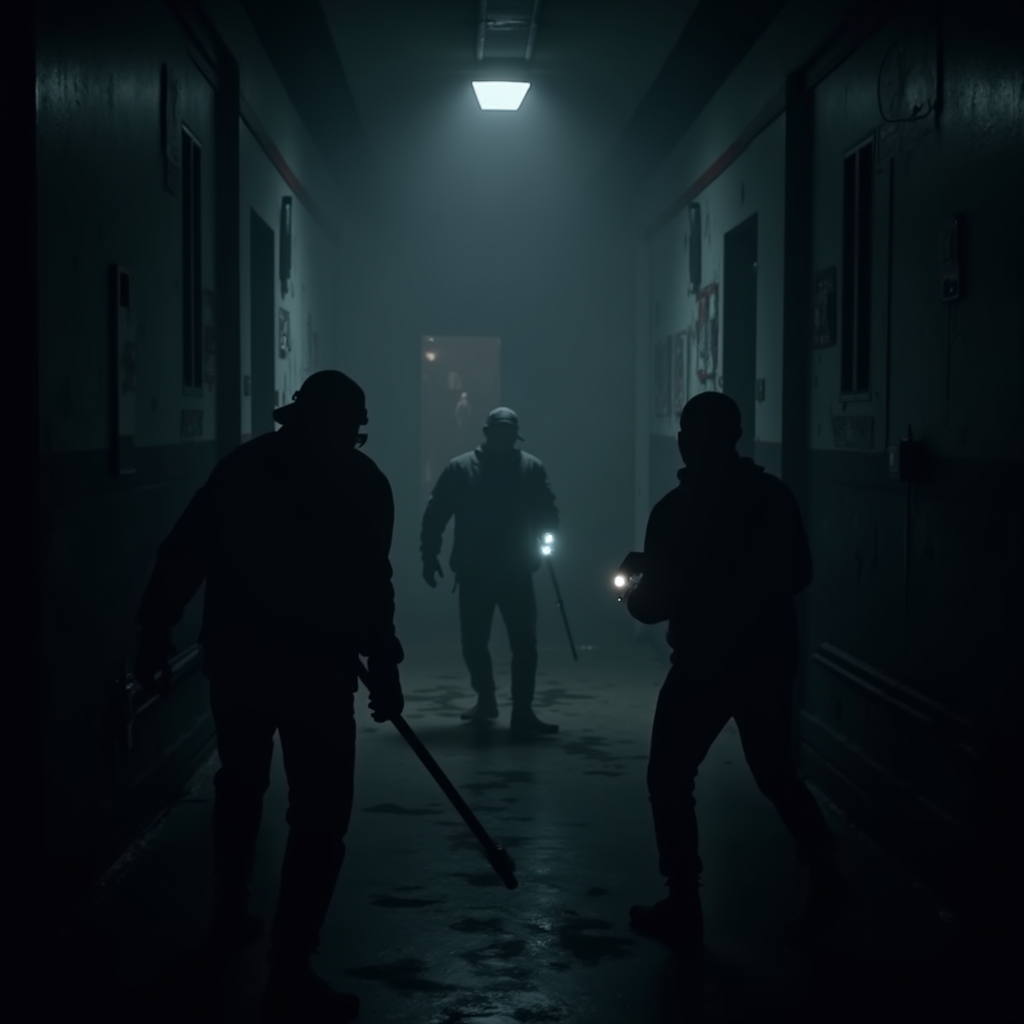
Phasmophobia's tension creates memorable shared experiences and inside jokes
The Safe Space Phenomenon
One of the most frequently mentioned benefits of gaming communities is their function as "safe spaces" for communication and vulnerability. This might seem counterintuitive given gaming's reputation for toxicity, but well-moderated cooperative communities often develop strong norms of mutual support and respect.
Dr. Michael Torres, a researcher studying online communities at MIT, explains: "Small, consistent gaming groups develop their own micro-cultures. Unlike large, anonymous gaming spaces, these tight-knit crews establish trust over time. The combination of regular interaction, shared challenges, and voice communication creates an environment where people feel safe being authentic. We've documented cases where people disclosed mental health struggles, relationship problems, or career anxieties to their gaming friends before telling anyone in their physical lives."
This phenomenon relates to what therapists call "parallel play"—the concept that people can bond while engaged in side-by-side activities rather than face-to-face conversation. For individuals who find direct social interaction draining or anxiety-inducing, gaming provides a comfortable alternative. You're talking, laughing, and connecting, but the primary focus is on the game, which reduces social pressure.
From Virtual to Reality
Perhaps the most compelling evidence of these connections' authenticity is how often they transcend the digital realm. The three individuals I interviewed have all met their gaming friends in person. Marcus flew to Chicago to attend a crew member's wedding. Sarah's Valheim group organized a camping trip in Colorado. James's Deep Rock squad holds an annual meetup where they spend a weekend gaming together in person.
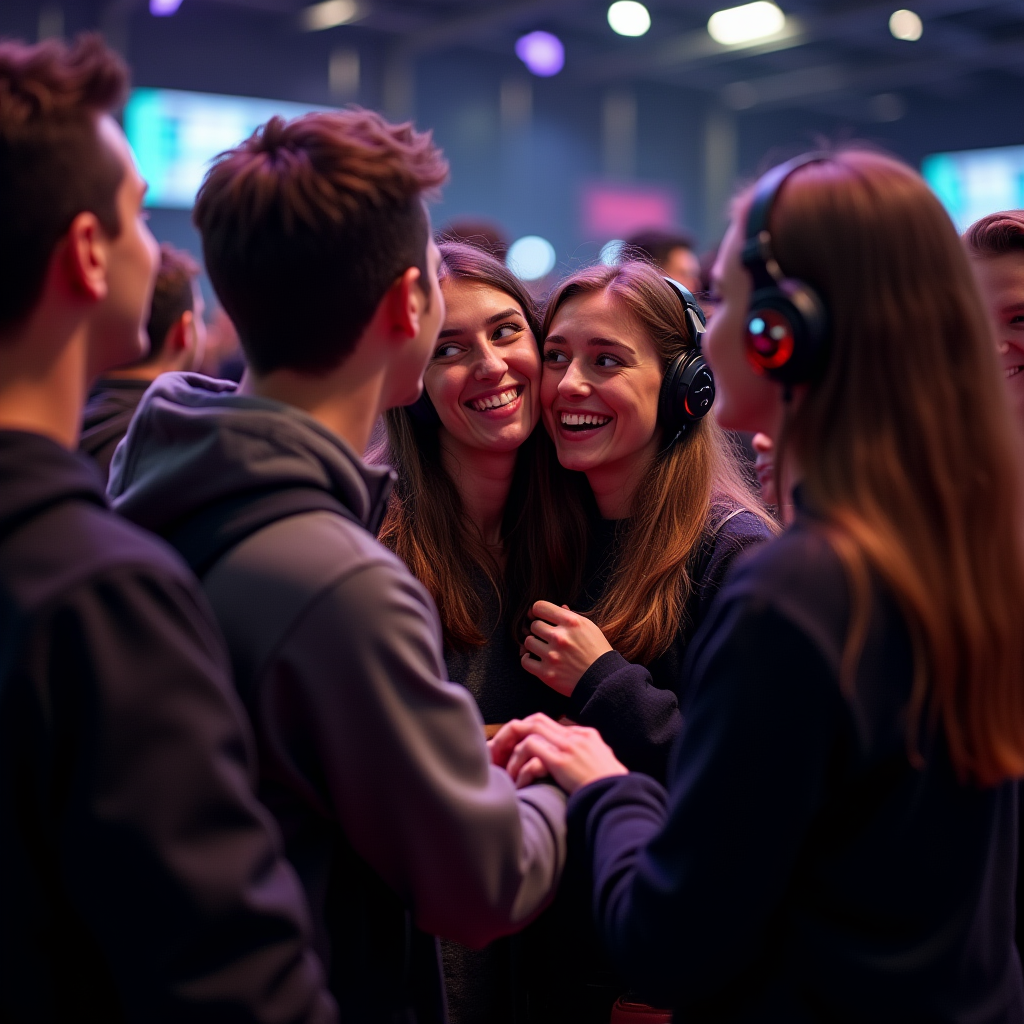
Many gaming friendships eventually transition to in-person connections
These in-person meetings often validate what players already knew: the friendships were real all along. The transition from voice chat to face-to-face interaction is typically seamless because the emotional foundation was already established. As Sarah put it, "Meeting them in person just confirmed what I already felt—these are my people."
The Broader Implications
The rise of cooperative gaming as a social infrastructure has broader implications for how we think about community, friendship, and mental health support in an increasingly digital world. As traditional community structures—churches, civic organizations, neighborhood associations—continue to decline, new forms of community are emerging to fill the void.
Key Insights
- Cooperative gaming creates genuine social bonds through shared challenges and regular interaction
- Voice communication adds emotional depth that text-based interaction cannot replicate
- Gaming communities often provide specialized support based on shared experiences and understanding
- The structured nature of gaming sessions creates reliable social rituals and routines
- Small, consistent groups develop trust and psychological safety over time
- Many gaming friendships successfully transition to in-person relationships
Gaming communities demonstrate that meaningful connection doesn't require physical proximity or traditional social structures. What matters is consistency, shared purpose, mutual support, and genuine care. These elements can exist just as powerfully in a Discord server as in a church basement or community center.
For mental health professionals, this represents both an opportunity and a challenge. The opportunity lies in recognizing gaming communities as legitimate support networks that can complement traditional therapy and social services. The challenge is understanding these communities well enough to guide patients toward healthy gaming relationships while helping them avoid toxic environments.
Looking Forward
As we move further into an era where digital and physical lives are increasingly intertwined, the distinction between "online friends" and "real friends" becomes less meaningful. The friendships formed through cooperative gaming are real because the emotions, support, and care are real. The medium of connection matters less than the quality of the connection itself.
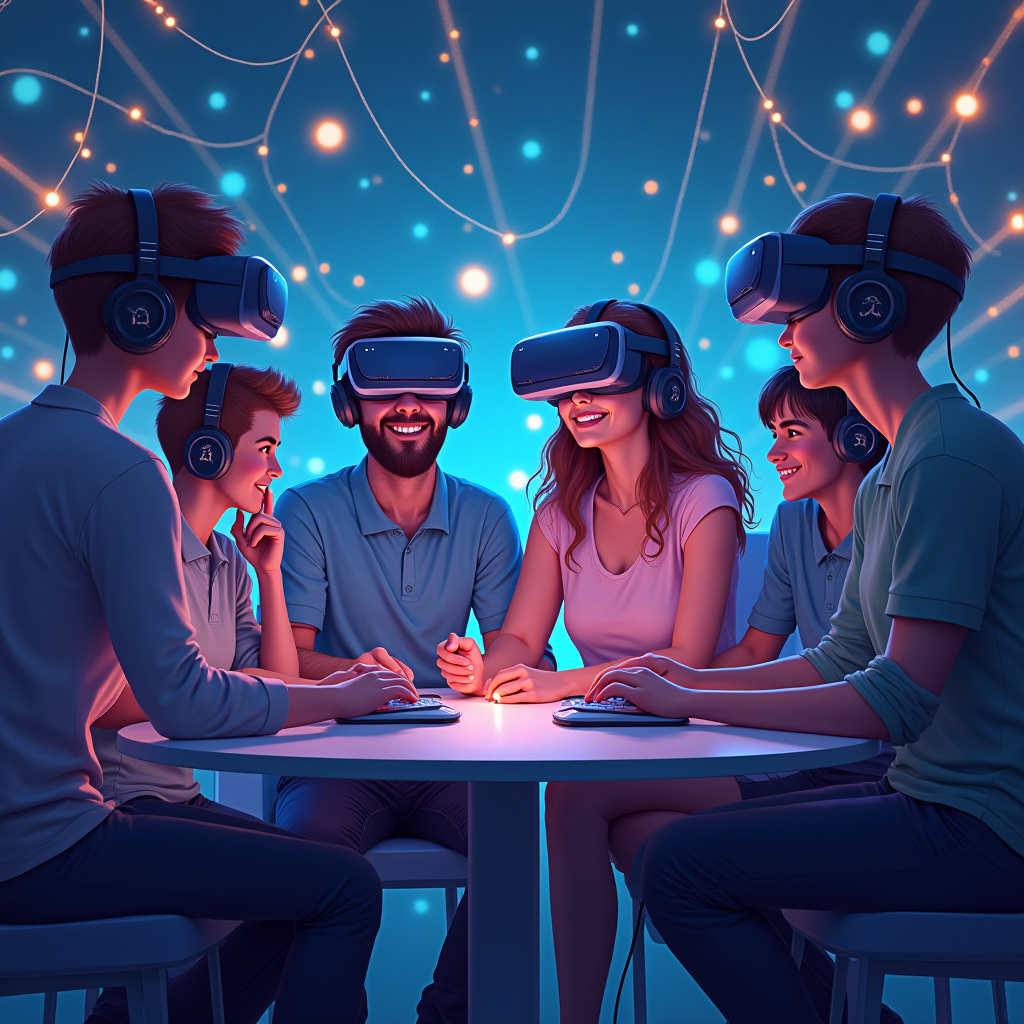
The future of social connection may increasingly blend digital and physical interaction
For those struggling with isolation, whether due to geography, circumstance, or social anxiety, cooperative gaming communities offer a viable path to connection. The key is finding the right community—one that values respect, communication, and mutual support. These communities exist across countless games and platforms, waiting for new members to join the crew.
Marcus, Sarah, and James all emphasized that their gaming communities didn't just help them survive isolation—they helped them thrive. They found friendship, purpose, laughter, and support. They found people who cared about them, checked on them, and celebrated their victories. They found, in the most unexpected place, a sense of belonging.
As Marcus told me in our final conversation: "People ask if my gaming friends are 'real friends,' and I tell them these are some of the realest friendships I've ever had. We've been through things together. We know each other. We care about each other. The fact that we met while shooting bugs in a video game doesn't make it less real—it just makes for a better story."
In a world that can feel increasingly disconnected and isolating, cooperative gaming communities remind us that human connection finds a way. Whether we're mining asteroids, hunting ghosts, or building Viking villages, we're really doing something much more fundamental: we're being together. And in that togetherness, we find the support, belonging, and friendship that make life worth living.